
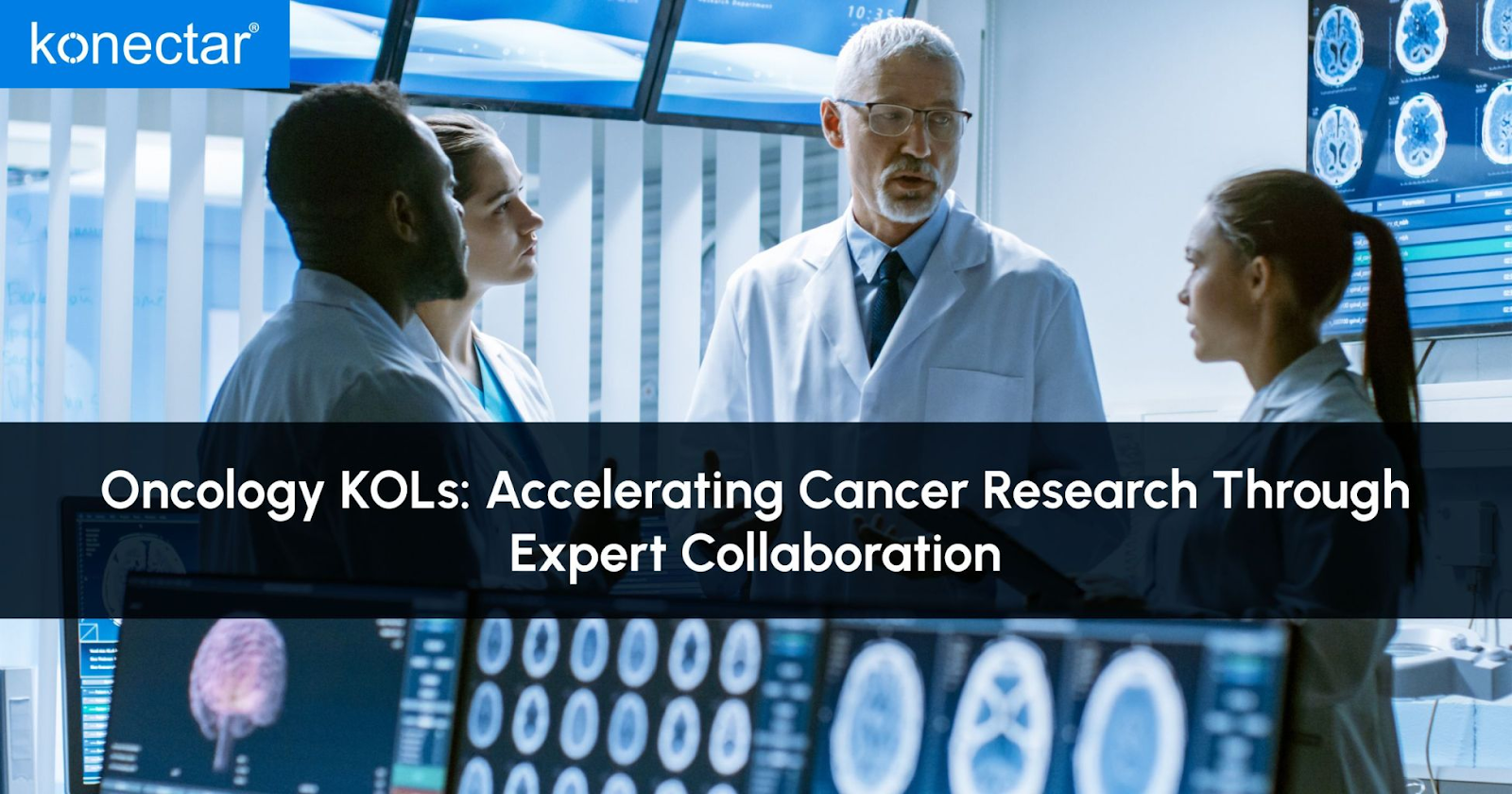
Oncology research has entered an era of abundant scientific discovery. With thousands of new targets, trials, and treatment combinations under investigation, the limiting factor is no longer discovery; it is expert judgment.
The journey from a laboratory breakthrough to a life-saving treatment for oncology is not a straight line. It is hyper-specialized. With the explosion of Antibody-Drug Conjugates (ADCs), bispecific antibodies, and treatments targeting molecularly defined subsets, the goal for Medical Affairs should be not only to disseminate data but also to establish clinical relevance in a crowded, noisy market.
Also, with multi-billion-dollar investments on the line, engaging the right oncology KOLs (Key Opinion Leaders) is a strategic necessity to ensure that a decade of research translates into actionable clinical utility.
For the modern Medical Affairs lead, this partnership acts as a safeguard at every stage of the product lifecycle, beginning long before the first regulatory filing. Let us explore in detail how.
1. Identifying the Unmet Medical Need
Pharma companies often look at the market through the lens of ten-year forecasts and retrospective data. Key opinion leaders, however, live in the daily friction of the clinic. They see the rising incidence of various forms of cancer in adults under 50 or the specific toxicity challenges of first-generation immunotherapies that data registries might not capture for years.
By identifying these nuances early, KOLs help research teams pivot toward unmet needs. For Medical Affairs, this means building a scientific platform that addresses the actual gaps in patient care rather than chasing redundant endpoints.
2. Refining Research through Scientific Exchange
A KOL’s scientific rigor ensures that research addresses a practical therapeutic dilemma. Through deep scientific exchange, KOLs help Medical Affairs and R&D teams ensure that what works in a humanized immune model has a high probability of changing the Standard of Care (SoC) for a diverse, real-world patient population.
This early alignment mitigates the risk of a “scientifically successful” trial that fails to gain clinical traction because it doesn’t solve a problem clinicians actually have.
3. Streamlining Site Selection and Global Feasibility
Oncology KOLs act as the ultimate filter for global feasibility. They provide critical intelligence on local treatment landscapes, identifying which academic centers or community networks have the specific diagnostic infrastructure (such as next-generation sequencing or liquid biopsy capabilities) required for the study. By engaging KOLs at this stage, Medical Affairs can prioritize high-performance clinical trial sites, identify PIs who have a proven track record of patient throughput and high-quality data generation and navigate regional standards.
4. Optimization of Trial Protocols
A protocol that looks perfect on paper often fails in practice due to overly restrictive inclusion criteria or unrealistic dosing schedules. Oncology KOLs provide the frontline “stress test” for trial designs. Their input helps:
· Reduce Screen Failures: By aligning criteria with real-world patient profiles and existing diagnostic workflows.
· Enhance Patient Retention: By identifying potential barriers to adherence, such as excessive biopsy requirements or travel burdens that might deter a patient in a community setting.
5. The Trust Factor in Recruitment
Patients don’t just join trials; they join journeys led by clinicians they trust. KOLs are often the principal investigators (PIs) who can motivate site staff and educate patients about the potential benefits of a novel mechanism. In an increasingly digital world, their endorsement, whether on a podium or a specialized virtual forum, carries the weight of scientific authority that traditional marketing cannot replicate.
The Need for Precision KOL Engagement
Expert collaboration is no longer a peripheral activity managed in fragmented spreadsheets; it is a central strategic pillar that determines whether a drug reaches the market in time to save lives. When you streamline the way you connect with brilliant minds, you don’t just accelerate research; you accelerate hope.
So Medical Affairs must move toward developing more scientific partnerships. This involves identifying the right KOLs and understanding their stance on emerging modalities based on their recent professional activities, including publications and public discourse. konectar provides this through a unified 360-degree view of expert profiles, crawling millions of data points across publications, clinical trials, social media, and conference activity.
By utilizing in-depth ranking and customizable tiering models, the platform allows teams to weigh scientific authority. This ensures you identify not just the most visible names, but the most relevant experts who could be the right fit for your specific goals. To see how Medical Affairs teams are streamlining their KOL management and accelerating their research timelines with precision, you can explore konectar.
